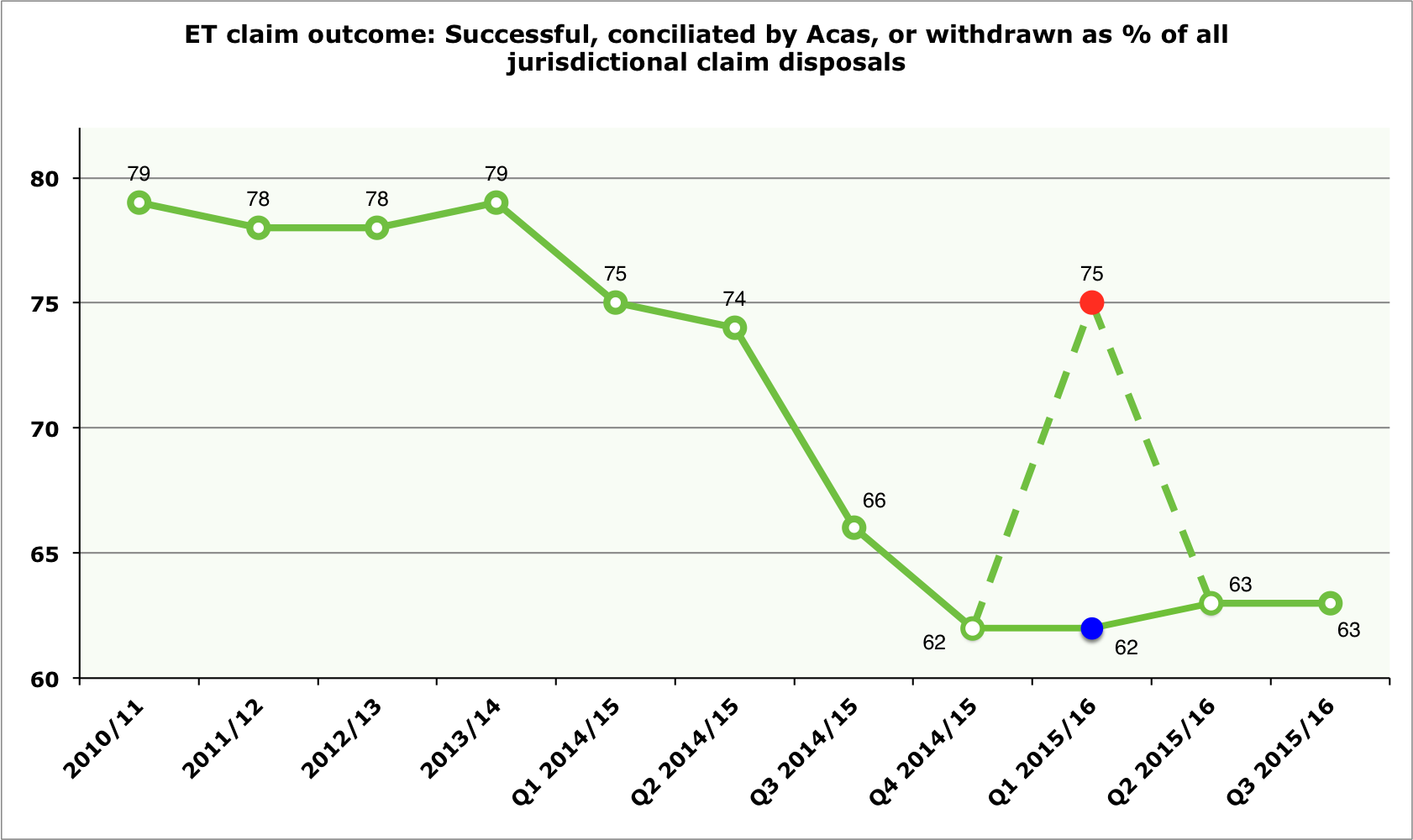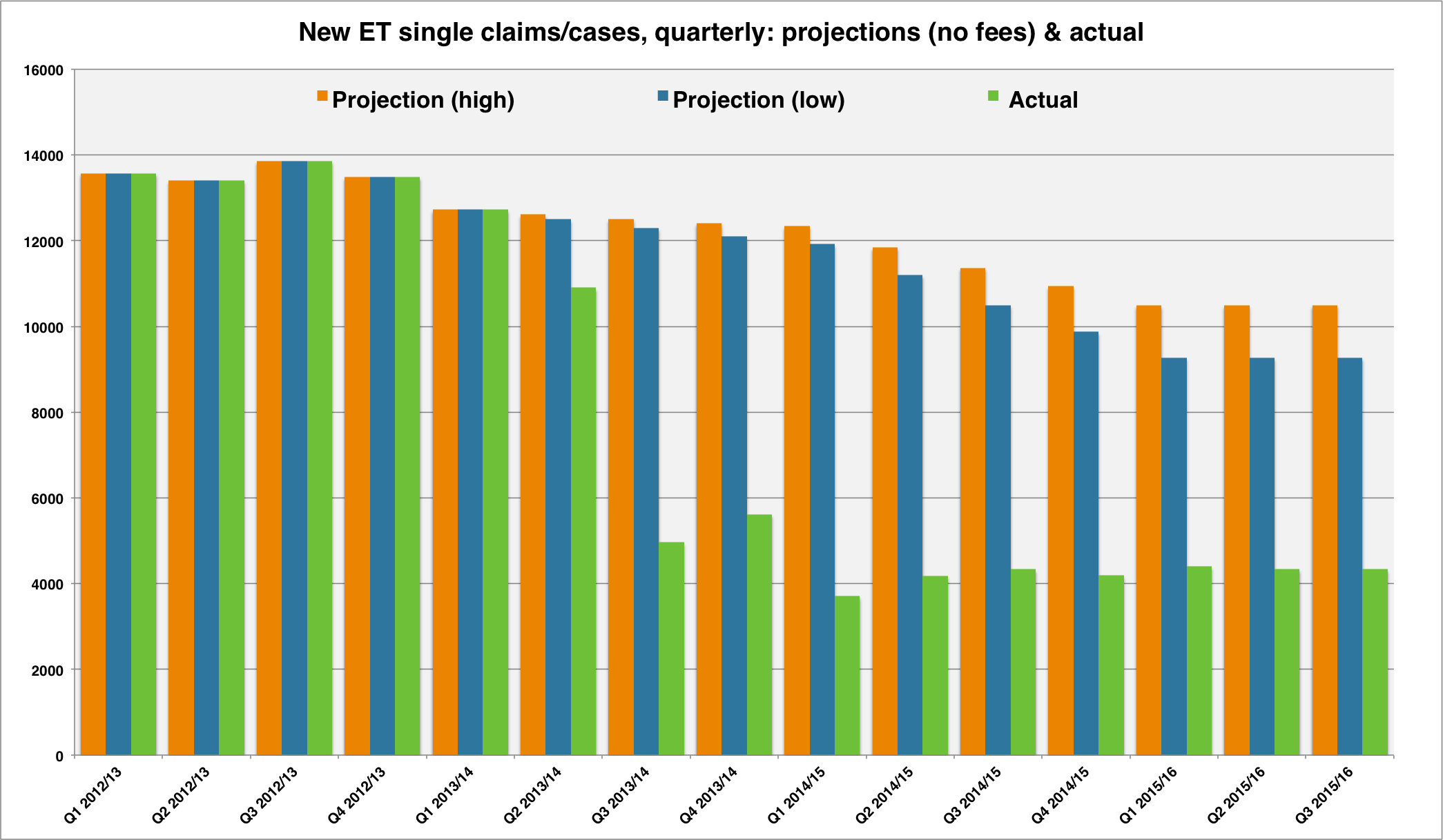
Paying the (s16) penalty. Or not, as the case may be.

Back in January, I noted on this blog that, since the provision came into force in April 2014, only 11 penalties had been imposed on employers under section 16 of the Enterprise & Regulatory Reform Act 2013, and that only four of those penalties had actually been paid. It quickly turned out that the super-computer on which the Department for Business, Innovation & Skills (BIS) stores the relevant data had been having a bad day at the office in January, and that 12 penalties have been imposed, of which six remain unpaid. And, by that time, I had submitted a Freedom of Information request to BIS, asking for the names of the naughty employers who, as well as treating their employers especially badly, in the view of an employment judge, have failed to pay the resultant penalty to HM Government.

Somewhat to my surprise, BIS has now complied with my request (FOI2016/02199, 1 March 2016), and the six wicked employers are:

Titchfield Limited

Spring Digital

CE Table

Civil & Groundwork Contractors Ltd

Ecogum

SS Communication Ltd

Five of the six appear to be economic minnows, with little if any internet footprint. Spring Digital, for example, appears to have done very little since 2012, and CE Table Ltd may well have been struck off by now.

However, Ecogum – or Eco Removal Systems – is an active company providing “an ecological cleaning solution to a worldwide problem … [the removal of] chewing gum, oil, grease, adhesive labels, graffiti, and plain old dirt.” Its clients include Chelsea Football Club, the Twickenham (rugby union), Wembley (football) and Wimbledon (lawn tennis) stadia, and King’s College London. In the last few days, it has tweeted about its work cleaning the streets of Scotland. It believes that “customer satisfaction is totally essential”. But it seemingly doesn’t believe in promptly paying financial penalties imposed by an employment tribunal, in compliance with the law.

Screen Shot 2016-03-05 at 15.01.35

What, if anything, is BIS (or the Ministry of Injustice) doing about this? In late January – and again on 11 February – BIS minister Nick Boles stated that “enforcement action is currently being considered for the outstanding penalties”. Watch this space.

Posted in Justice, Workers' rights | Tagged , | Leave a comment

Ice-cold in Calais

This morning I was up early to accompany Green Party leader Natalie Bennett and London Assembly member Jenny Jones as they visited a ‘bunch of migrants’ (© David Cameron) in the Calais refugee ‘camp’ known – seemingly with good reason – as the Jungle. (Natalie and Jenny were following-up on their previous visit, in November last year).

Queen Mary I is supposed to have exclaimed “When I am dead and opened, you will find Calais written on my heart”. And I imagine there are a fair few Afghans, Eritreans, Iraqis and Syrians who have uttered something similar – though for very different reasons. For the Calais camp is simply a hell-hole. Think ‘Glastonbury at its wettest’ (without the music and the fun) meets Apocalypse Now (without the helicopters and the heat).

As Yvette Cooper noted last month, within this bleak, third-world shantytown on Britain’s doorstep, “scabies is rife, bronchitis too. Families sleep in flimsy tents in bitter cold. Children play in mud and rubbish. No one is doing assessments to identify refugees who need sanctuary. No one is delivering asylum. No one is enforcing immigration rules. And, most urgently of all, no one is making sure that vulnerable people – especially children – get basic humanitarian aid and protection to keep them safe.”

That last bit’s not strictly true, of course, as – in the striking (and shaming) absence of both governmental organisations and major aid agencies – an impressively-organised network of short- and long-term volunteers with French charity L’Auberge des Migrants and UK charitable fund Help Refugees provides aid to the 5,000 or more residents, including building shelters and providing material for migrants to build their own shelters, and distributing bedding, food and clothes.

Help Refugees began as a grassroots social media campaign (#HelpCalais) in August last year, aiming to take a single truck-load of aid to Calais. Seven months later, the L’Auberge/Help Refugees operation – based in a warehouse a few miles from the camp – and that of other small-scale, volunteer-led groups is pretty much all that France and Britain – two of the richest countries in the world’s strongest economic bloc – can muster in the way of humanitarian concern.

Living in this hell-hole, according to the L’Auberge/Help Refugees volunteers (most of them British), are “hundreds of unaccompanied children”. Kate – who draws sketches of residents and posts them on her Twitter account – showed us her sketch of a 12-year-old Afghan boy, whose aunt and uncle live in the UK; he’s been in the Calais camp for five months. Mary, a midwife, told us there are at least two babies, and at least six pregnant women. Earlier this week, in the Dunkirk camp some 20km along the coast – where, according to the volunteers, conditions are even worse – Mary had come across an Iraqi mother about to feed her baby from an unsterilised, barely even washed bottle.

We had too-sweet tea with Mustafa in the make-shift ‘cafe’ he has painstakingly constructed during his eight months in the camp. Tomorrow, or the day after, or sometime soon at least, Mustafa’s ‘cafe’ (also his ‘home’) is set to be bulldozed along with the rest of the ‘cafes’, ‘shops’ and even ‘restaurants’ that fill his ‘street’. Mustafa will be left with nothing but a small bag of clothes and other possessions.

Yet, as Yvette Cooper says, the most shocking thing about this festering insult to our collective humanity and self-respect is that “it’s not even too big to solve. Of the 1 million people who arrived in Europe last year, just 5,000 have ended up in the Jungle at Calais, and 3,000 more at Dunkirk. In contrast, 5,000 people arrive on the Greek island of Lesbos every day. Yet no one has a proper plan to sort it out. Not the French or British governments, the UN, or the big agencies.”

That simply has to change – and the British government could make an immediate start by acting on the call of the Green Party and others to take in all the unaccompanied children from the two camps.

In the meantime, you can support the L’Auberge/Help Refugees volunteers with a financial or other donation. Contact them via: calaisdonations@gmail.com (or, if you’d like to offer your time: volunteerincalais@gmail.com). And you could sign this open letter to David Cameron.


Posted in Refugees | Tagged , , | Leave a comment

Minimum wage enforcement, the Tory way

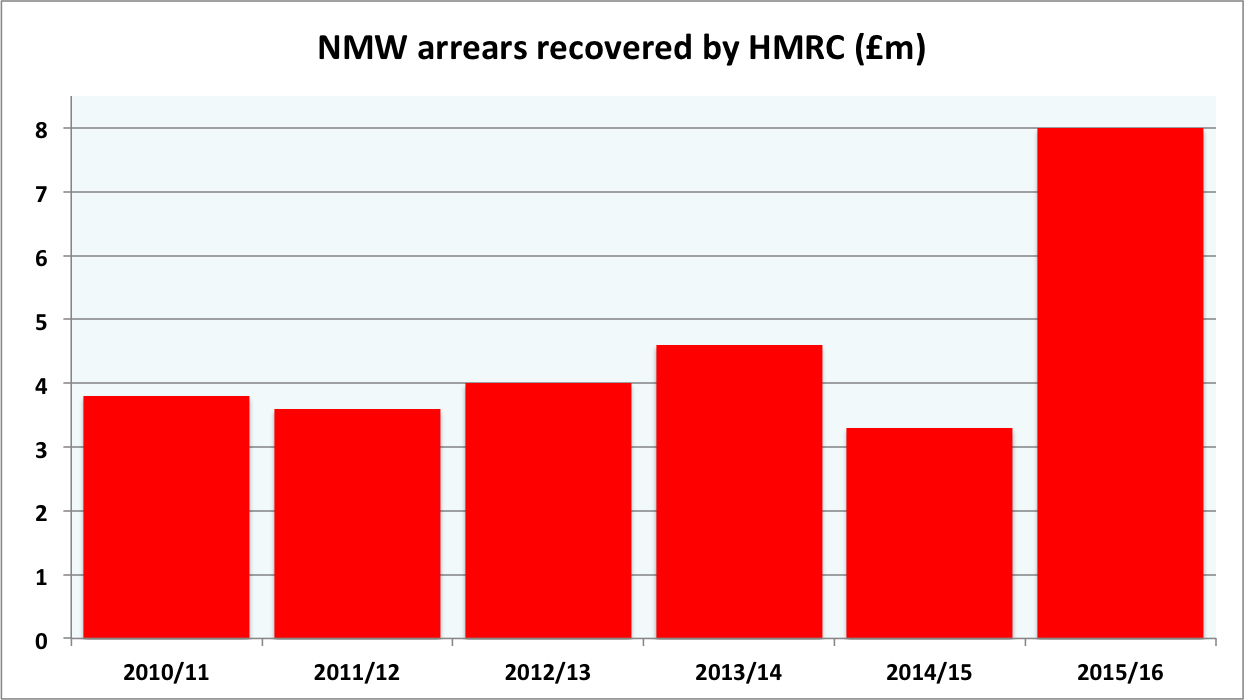
Something very unusual has been going on with enforcement of the national minimum wage. As the following table shows, over the past five years HMRC has recovered an average of £3.9 million in arrears for an average of 23,147 workers. And the figures for both arrears recovered and workers involved have been pretty steady, year on year. Certainly, no variation worthy of a Wonky graph (sorry, Gem).

FY Arrears recovered Workers covered
2010/11 £3.8m 22,919
2011/12 £3.6m 17,371
2012/13 £4.0m 26,519
2013/14 £4.6m 22,610
2014/15 £3.3m 26,318
Average £3.9m 23,147
Source: Table 13, Final Government evidence for the Low Pay Commission’s 2016 report, BIS, January 2016.

However, today, Treasury minister David Gauke MP stated – in answer to a written parliamentary question by Caroline Lucas MP – that, in the seven-month period “from April 2015 to November 2015”, HMRC “took action against over 500 businesses, identifying over £8 million [of arrears] for 46,000 workers.”

As the Minister helpfully added, “this is already the largest amount of arrears identified in any single year since the introduction of the NMW”. Indeed, despite the number of employers involved (“over 500”) being par for the course at this stage of the financial year – HMRC took action against 735 employers in 2014/15, 680 in 2013/14, and 736 in 2012/13 – that £8m (in seven months) is more than twice the average arrears recovered in recent years, and 46,000 workers (in seven months) is twice the average number of workers (23,147).

What’s more, in early September last year, BIS minister Nick Boles told MPs that “since 7 March 2014” – that is, over the previous 18 months – HMRC had recovered “almost £5.9m”. As HMRC recovered £3.3m in the financial year April 2014 to March 2015, that implies recovery of some £2.6m between April and August 2015 – a bit more than normal, for sure, but nothing extraordinary. And, set against David Gauke’s answer today, that in turn implies that HMRC recovered a whopping £5.4m in the three-month period September to November 2015.

Hold on Gem, that graph may be coming.

Earlier this month, we learnt that HMRC recovered no less than £1.74m of arrears from security firm TSS (Total Security Services) Ltd at some point in the past year or so. That is, by some distance, the largest (reported) sum ever recovered by HMRC from a single employer, yet still only covers 2,519 workers. This might explain that above average figure of £2.6m recovered between April and August 2015. Or it might be part of that £5.4m seemingly recovered between September and November 2015.

Even in the latter case, that leaves an as yet unexplained recovery of some £3.7m of arrears in just three months in the autumn of 2015. Together with an as yet unexplained 20-25,000 more workers than than we might reasonably expect over a seven-month period.

So, what is going on? Well, it might be relevant that, from late July last year to the end of January, BIS ran an effective ‘amnesty’ for NMW-breaching employers who self-reported themselves to HMRC. Since the expiry of that ‘amnesty’ on 31 January, the (one-page) webpage has been deleted, but in anticipation of that I took the following screenshots:

Screen Shot 2015-12-31 at 13.14.46


Screen Shot 2015-12-31 at 13.15.35


So, could it be that, in the autumn of 2015, one or two large employers took advantage of this effective ‘amnesty’ to cough up a total of some £3.7m in arrears (or some £5.4m, if TSS Ltd’s £1.74m is part of the £2.6m recovered earlier in the year) and so avoid as much as £3.5m (or £5.4m) in financial penalties – reduced by 50% for prompt payment – and BIS naming & shaming? As well as, it must be assumed (since it wasn’t mentioned on the ‘amnesty’ webpage), the possibility of criminal prosecution for ‘serious’ breaches of the NMW? How convenient.

And could one of those employers be Sports Direct, which – according to the Guardian – employs about 15,000 workers on low-paid, zero-hours contracts, together with another 4,300 low-paid agency workers? And which, following an undercover operation by Guardian journalists, suddenly announced in December that it is stumping up £10m per year from now on to ensure compliance with the NMW?

Or could it be that HMRC is finally getting to grips with the long-standing, systemic flouting of the NMW in the social care sector? Last month, for example, the BBC reported that “about 100 home care workers in Swansea and Carmarthenshire are to be paid up to £2,500 each” in NMW arrears, after MiHomecare had been found to have not been paying its employees to travel between clients. MiHomecare reportedly employs some 6,000 care workers nationally – and why would it have been paying its care workers in Swansea and Carmarthenshire any differently to those in other parts of the country?

Being a humble policy minion, I have no idea – and I’m told that Sports Direct employees know nothing of any NMW arrears that might be coming their way. But David Gauke and Nick Boles must know. And, if they are as committed to ensuring compliance with the NMW as they profess, they really ought to tell us. And explain this graph.

NMWarrears

Posted in Workers' rights | Tagged , , | 1 Comment

Don’t panic, Mr Boles!

Scene: The private office of BIS skills minister, Nick Boles.

Civil servant (breathlessly): “Ah, minister and permanent secretary, I’m glad I’ve caught you both. We have a situation.”

Minister: “What, trouble in the City?”

Civil servant: “No, minister, the City is fine. But, you might remember, last month you answered a parliamentary question about the imposition of financial penalties on employers by employment tribunals.”

Minister: “Oh yes, by that pesky Green woman.”

Civil servant: “Dr Lucas, yes. Anyway, the problem is, in your answer to the question, you said that eleven financial penalties have been imposed since April 2014.”

Minister: “I did? Well, you write these things. But sounds right to me. We can’t have bloody employment judges imposing penalties on employers, it would bring the economy to its knees. And don’t forget all the satellite litigation.”

Civil servant: “Yes, well. The thing is, the answer should have been … twelve.”

Minister: “What the fuck?”

Civil servant: “But it’s OK, minister, we’ve already initiated the CRAP working group, and the group has drafted a corrected answer.” [Hands draft corrected answer to minister]

Minister: “The CRAP working group?”

Permanent Secretary: “Yes, minister, the Correct, Rescind and Placate working group. It was one of Dr Cable’s ‘machinery of government’ reforms.”

Minister: “Have you informed Number Ten?”

Civil servant: “Yes, minister. That’s all part of the CRAP process. Dr Cable had to run all his cock-ups past the Prime Minister.”

Minister: “And … er, how did the PM take it? Did he sound cross? Am I in trouble?”

Permanent Secretary: “No need to worry, minister. That’s why it’s called the Correct, Rescind and Placate working group. We did a lot of placating, under the Coalition.”

Minister (reading draft corrected question): “But look, the number of paid penalties has gone up too, from four to six. That’s real progress, isn’t it?”

Civil servant: “Yes, minister.”


Posted in Justice | Tagged , | Leave a comment

BIS, you cannot be serious!

So, with markedly less media hoo-ha than on previous occasions, BIS today ‘named & shamed’ another 92 employers for breaching the national minimum wage (NMW). The relative dearth of national media coverage may reflect the absence from this tranche – the Conservative government’s third since May 2015 – of any household name retailers, but the first name on the list – TSS (Total Security Services) Ltd., of London E4 – was in fact notable for at least three reasons.

The first – and most obvious – is that the total wages TSS Ltd were found by HMRC to have thieved from 2,519 of its employees – £1.742 million – is, by some distance, the largest sum owed by any of the 490 NMW-breaching employers named & shamed by BIS to date under the revamped scheme introduced in October 2013.

That’s almost 17 times the next largest sum owed – £104,507.83, by Monsoon (named & shamed in October 2015), to 1,438 workers – and more than 700 times the average sum owed by the other 488 named & shamed employers (£2,474.10). And it accounts for no less than 57% of the total £3,054,501.90 of arrears owed by the 490 employers named & shamed to date.

If we include the 165 employers that BIS says escaped naming & shaming under the 2013 scheme on the basis that the arrears they owed were less than £100, then the sum owed by TSS Ltd is a stonking 858 times the average arrears owed by the other 654 employers found to have breached the NMW in investigations launched since October 2013.

To put TSS Ltd’s £1.742m in context from a different angle, in the whole of 2014-15 HMRC recovered just £3.3m of arrears on behalf of 26,318 workers.

Yet, apparently, thieving £1.742m from 2,519 of your workers still isn’t a ‘serious’ enough evasion of a legal duty that’s only been around for 16 years to qualify TSS Ltd for criminal prosecution. Which begs the question, just how badly do you have to breach the minimum wage these days to get prosecuted? Sadly, no journalist seems to have thought it worth putting this question to BIS.

As recently as May last year, BIS stated that “the more extensive and substantial the alleged arrears, the more likely it is that HMRC will wish to investigate with a view to [criminal] prosecution”. Yes, but how likely? Just imagine what would happen to someone who fraudulently claimed £1.742 million in social security benefits. [Postscript: Asked to explain HMRC’s reasons for not prosecuting TSS Ltd, ministers have declined to do so].

The second reason the naming & shaming of TSS Ltd was noteworthy, to me at least, is that the company’s somewhat less than angelic approach to life has already been laid bare in court. TSS Ltd provides security guards to a number of high street retailers, and many of those guards have played a crucial role in a nasty (and very profitable) legal scam known as ‘civil recovery‘. This involves agents for household name retailers such as Boots sending demands for ‘compensation’ to those accused – but not necessarily guilty – of petty shoplifting, with threats of civil court action if the (pre-determined, arbitrary and excessive) sum demanded is not paid promptly.

Two reports for Citizens Advice in 2009 and 2010 by yours truly led first to a debate in Parliament, and then – in May 2012 – to a test case in Oxford County Court that ended horribly for the civil recovery agent in question – Retail Loss Prevention – and its retailer client (which was so embarrassed it successfully sought anonymity in the judgment). And a crucial factor in that legal debacle was the utter demolition, in the witness box, of a TSS Ltd manager, Susan Kent.

In her signed witness statement, Mrs Kent had claimed she spent six hours and 45 minutes ‘dealing’ with the attempted theft by three teenage girls. However, under cross examination in court, Mrs Kent was eventually forced to admit she had spent no more than one hour and 10 minutes ‘dealing’ with the incident. And this mattered, because the legally unfounded claim for ‘compensation’ was based largely on how much time Mrs Kent and a junior TSS Ltd colleague had supposedly spent ‘dealing with the incident’. Oops.

So, it’s nice to see a bunch of shits getting hit with a bill for £1.742m – plus, presumably, a tidy (but unknown) sum in financial penalties for non-compliance. But the third reason that the ‘naming & shaming’ of TSS Ltd was noteworthy is that any number of its security guard vacancies have been advertised and promoted via numerous branches of the Government’s JobCentre Plus.

Screen Shot 2016-02-05 at 23.10.00Screen Shot 2016-02-05 at 23.03.44Yes, that’s right. A company that has thieved £1.742 million from its low-paid employees, and been ‘named & shamed’ (but not prosecuted) by government for doing so, can advertise its vacancies for free on a government website. And how many of those advertised vacancies complied with the national minimum wage?

Joined-up government, anyone?

TSS Ltd aside, the list of 92 NMW-breaching employers was otherwise the usual ragbag of economic minnows. Sixty-five of the 92 employers owed arrears to just one worker, and only six owed arrears to more than five workers. Thirty-five owed total arrears of less than £500, and 71 owed less than £2,000. TSS Ltd owed arrears to three times as many workers as the other 91 employers put together (833). However, for once, there were more employers in the hospitality sector (17) than there were hairdressers/beauty salons (12). So my updated ‘chart of the meanies’ looks like this:

ShamedJan16

Posted in Justice, Workers' rights | Tagged , , , , , | 3 Comments

Another Coalition miss from the penalty spot?

With the Department for Business, Innovation & Skills (BIS) having recently confirmed that it is set to commence section 150 of the Small Business, Enterprise and Employment Act 2015 – which provides for the imposition of financial penalties on respondent employers who fail to pay an employment tribunal award – from April this year, now seems a good time to take another look at how things are going with the not unrelated provisions in section 16 of the Enterprise & Regulatory Reform Act 2013. Since coming into force in April 2014, those provisions have empowered employment judges to impose a financial penalty of up to £5,000 on an employer found to have breached the claimant’s rights in a way that “has one or more aggravating features.”

Last summer, I noted on the Hard Labour blog that, as of 8 June 2015, just three such penalties had been imposed, of which only one had been paidAnd I reiterated my belief that the most likely explanation for this tiny number is that

the hefty, upfront tribunal fees introduced by the Ministry of Injustice in July 2013 have eradicated exactly the kind of tribunal claim that [former business secretary] Vince Cable [and former BIS employment relations ministers] Ed Davey and Norman Lamb evidently had in mind when they came up with the section 16 penalty regime: a relatively low value claim (because the claimant is or was low paid) against a deliberately exploitative employer. For why would a vulnerable, low-paid worker subjected to ‘wage theft’ of a few hundred pounds gamble up to £390 on trying to extract the unpaid wages or holiday pay from their rogue (former) employer?

At this point, it’s worth noting that in September last year, there were just 748 claims for unpaid wages, down from a monthly average of 4,940 in the year before the introduction of fees in July 2013 – a fall of 85 per cent.

Well, another eight months have passed, and BIS has now confirmed, in response to a written parliamentary question by Caroline Lucas MP, that a mere 11 penalties have been imposed to date, of which only four have actually been paid. In relation to the seven unpaid penalties, “enforcement action is currently being considered”. Well, woo hoo.

So, what does this tell us? Well, it suggests we shouldn’t always listen to vested interests when they spout dire warnings about the likely impact of draft legislation. Back in 2012, the British Chamber of Commerce attacked the section 16 provisions as “a fundamentally anti-growth measure” that could “result in a more risk-averse attitude to employing people, particularly amongst SMEs”, while the TUC thundered that the provisions would “generate extensive satellite litigation” and “prolong remedies hearings”. Oof.

It also suggests – as if we didn’t know already – that we should take what BIS and other government departments say in their regulatory impact assessments with a heaped tablespoon of salt. In late 2011, BIS suggested in its final impact assessment that the section 16 provisions would generate a nice little income of £2.8m a year. So, the provisions should by now have netted HM Treasury some £5.1m. Yet the actual income of just £20,000 at most (4 x the maximum penalty of £5,000) probably doesn’t even cover the cost to BIS of preparing that meaningless impact assessment in 2011, let alone the time and effort seemingly wasted by MPs and peers on scrutiny of the provisions in Parliament in 2012 and 2013.

As recently as March 2015, BIS predicted that the section 150 penalties now set to come into force in April will generate a more modest annual income for HM Treasury of £0.1m. But with ET fees having slashed the number of tribunal awards that can go unpaid, thereby generating a s150 penalty, even that little trickle of dosh must now be in doubt.

Well played, Vince, well played.

Posted in Workers' rights | Tagged , , , , | Leave a comment

Employment tribunal fees: All you need is Gove

With almost four months having passed since Ministry of Injustice officials dumped their ET fees review report in the intray of the nation’s slowest reader – junior injustice minister Shailesh Vara MP – and two months having passed since the justice select committee of MPs took oral evidence on the issue*, it is perhaps not too ridiculous to expect an announcement by everyone’s favourite justice secretary, Michael Gove, reasonably soon. But what kind of announcement will it be?

For those of us hoping Gove will substantially reduce or even scrap the fees introduced by Coalition ministers in July 2013, there was some bad news this week from the Institute for Government. The Institute’s wonks have been pouring over the detailed departmental spending figures that the Government publishes quarterly, and comparing these against each department’s spending plans for the year. And they’ve found that the Ministry of Injustice is “worryingly off target”.

[The Ministry of Injustice] has seen a 3.1% fall in its day-to-day spending compared to 2014/15, which sounds rather good (at least from a fiscal hawk’s point of view). However, the department needs to cut its spending by over 12% this year to meet the Government’s plans. So it looks as though [the Ministry] has a lot of catching up to do in the second half of the year. And that is unlikely to be the end of the story – this is a department with one of the toughest settlements in the recent spending review.

In other words, the Ministry is not exactly well placed to take the £20m a year hit that would come with full abolition of ET fees.

However, Gove must be under considerable pressure to do at least something on ET fees. Apart from the pending justice select committee report, and the Ministry’s bulging file of my blog posts, it is surely no coincidence that the Department for Business, Innovation & Skills (BIS) and the Equality & Human Rights Commission (EHRC) have yet to publish the long overdue final reports of their joint investigation of pregnancy and maternity discrimination in the workplace. Those final reports, originally scheduled for publication last autumn, include policy recommendations by the EHRC, and I will be astonished if they don’t highlight the detrimental impact of ET fees on women’s access to justice.

sexpreg

So, we have to hope that Gove is at least looking at a substantial reduction in the level of the fees. And that he has been reading up on past policy statements by employer bodies such as the British Chambers of Commerce, which in July 2012 suggested it would “make sense to fine non-compliant employers an automatic small administration fee, aligned with the [claimant issue] fee”. This is not dissimilar to my own, January 2012 proposal for a ‘polluter pays’ financial penalty for those employers found by a tribunal to have breached the law – that is, those employers that create the need for an employment tribunal system. In March last year, I noted that:

Each year, about 12 per cent of all claims are successful at a hearing or result in a default judgement in favour of the claimant. And, if claim/case numbers [were to rise] to just below their 2012-13 level [thanks to a substantial lowering of claimant fee levels], there would be about 6,500 losing employers. Imposing a penalty of £1,000 on each of those losing employers – a hefty sum, for sure, but still less than the £1,200 some claimants have to pay in fees now – would generate an annual income of £6.5 million.

Were Gove to combine such a ‘polluter pays’ financial penalty with a modest (or nominal) fee for employers to defend a tribunal claim – and why shouldn’t employers pay to use the tribunal system? – he would give himself the financial space he needs to reduce claimant fees to a modest (or, ideally, nominal), level.

But first, Shailesh Vara has to finish reading that review report. Do hurry up, Mr Vara!

[* Since writing this post, I see the justice select committee is taking further oral evidence on (court and) ET fees, from the senior judiciary. So, the committee’s report may still be some way off.]

Posted in Justice | Tagged , , , , | Leave a comment

Modest Vince and his modest reforms

Call me weird, but if I was Vince Cable, I wouldn’t go around bragging about how I “blocked” attempts by George Osborne to “set a high minimum wage” – as Sir Vince does in his near unreadable tome about how brilliant and sensible he was in the Coalition, After the storm. (Apparently, all the bad Coalition stuff was the work of someone else – Dave, Nick, George, or Danny). No, I think I’d keep that to myself, just in case I run into one of the all too many strivers who have to live on – or even below – that minimum wage.

That particular boast was on page 12 of After the storm. So I had to read another 195 coma-inducing pages before I got to Sir Vince’s mind-boggling assertion that his time as Mr Sensible of the Coalition included “a modest shift in [the] terms governing unfair dismissal, in order to reduce the numbers of cases going to tribunals”.

As Sir Vince helpfully spells out, this modest reform means that “it now requires two years of employment, rather than one, before an [unfair dismissal] case can be brought”. I’m a bit rubbish with statistics, but I think that’s a 100% increase in the length of the qualifying period. So I suppose we must be grateful that Sir Vince and the useless Dave, Nick, George and Danny didn’t go for less modest reform of unfair dismissal law.

However – as you may have guessed, if you’re my Mum or Gem Reucroft – it was Sir Sensible’s claim about needing to reduce the number of unfair dismissal cases going to tribunals that really got my goat. Because – and I have a chart to show this, which proves my moral superiority over Sir Vince, who includes no such chart in After the storm – the number of tribunal claims for unfair dismissal fell from 57,400 in 2009-10, the last year of the Labour government led by the equally useless Gordon Brown, to 47,900 in 2010-11, and to 46,300 in 2011-12. That’s one unfair dismissal claim every 26 years, on average, for each of Britain’s 1.2 million employers.

Call me weird (again), but that doesn’t look like a crisis requiring a 100% – sorry, a modest – increase in the qualifying period for legal protection from unfair dismissal. Admittedly, the number of such claims did shoot up by a whopping 6.3% to 49,200 in 2012-13, but by then Mr Sensible and the Silly Billies had already decided that modest, 100% reform of unfair dismissal law was necessary to prevent the economy going into meltdown. Or something.

Indeed, that 6.3% increase followed their modest reform in April 2012. Oops. It was all going so well until then. Here’s that chart of which Sir Vince can be so proud.

UD

In the 12 months following Sir Vince’s modest reform in April 2012 (the orange column), we can see that modest, 6.3% increase in unfair dismissal claims. And then, in July 2013, Chris Grayling introduced his own modest reform (the blue column) and over the next 12 months unfair dismissal claims fell by an extremely modest 66%, never to recover.

As Sir Vince puts it in his soporific After the storm, “measures introduced elsewhere in government radically to increase tribunal fees” – that is, measures that were nothing to do with Sir Sensible, who was simply in charge of employment law policy at the time – “have almost certainly tipped the balance too far against workers”.

You think?

Posted in Workers' rights | Tagged , , , | 3 Comments