
The latest set of quarterly Tribunal statistics – published last week – indicates that, having risen steadily from mid-2017 (when fees were abolished) to a Covid-induced peak in late 2020, the number of new Employment Tribunal cases has now settled down at just over half (55%) the pre-fees level seen in 2012/13. While the introduction by HM Courts & Tribunals Service of a new case management system in March 2021 means that comparisons with previous periods may be problematic, the new normal does seem to be about 8,000 new cases per quarter, or about 32,000 new cases per year.
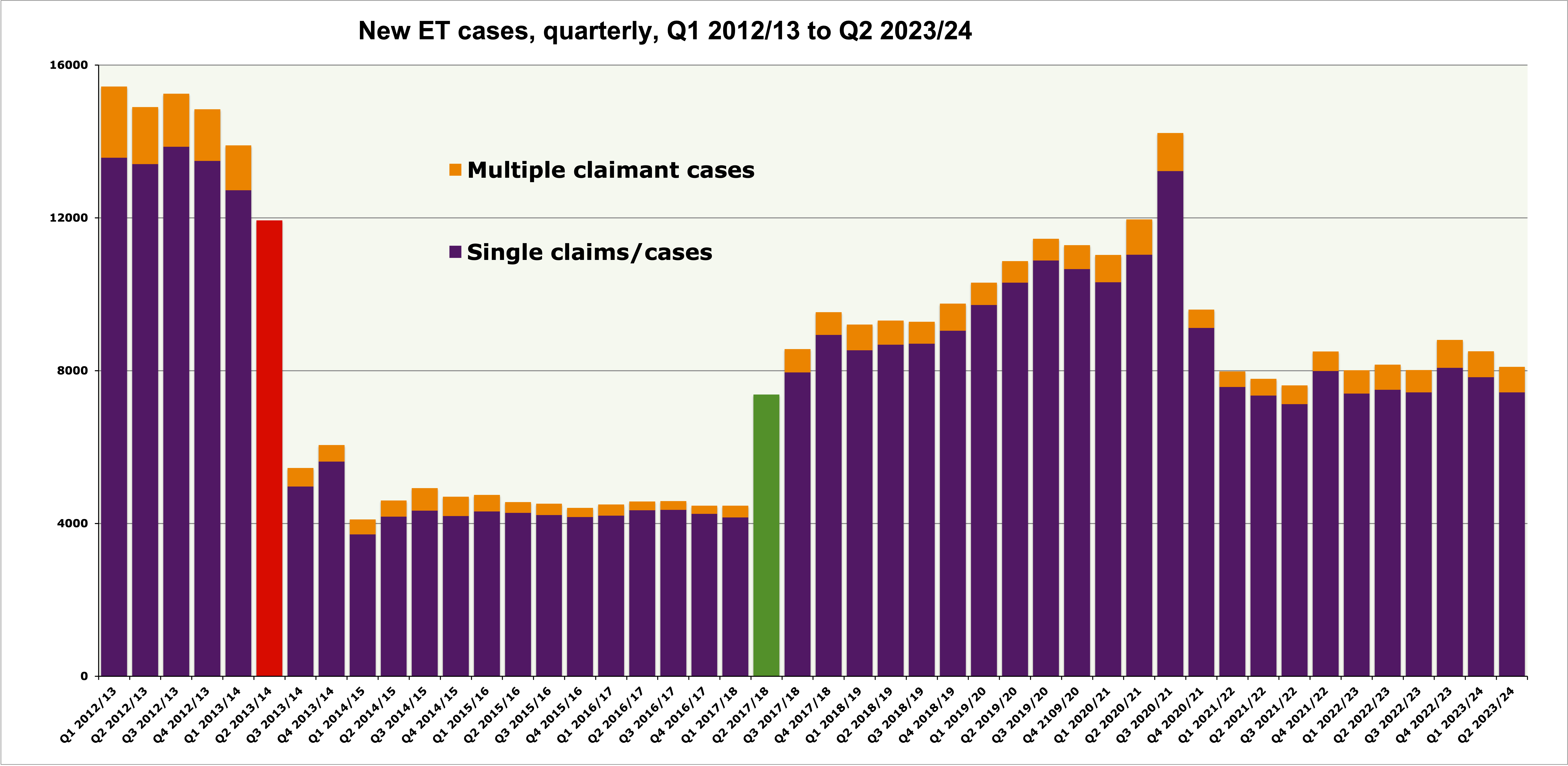
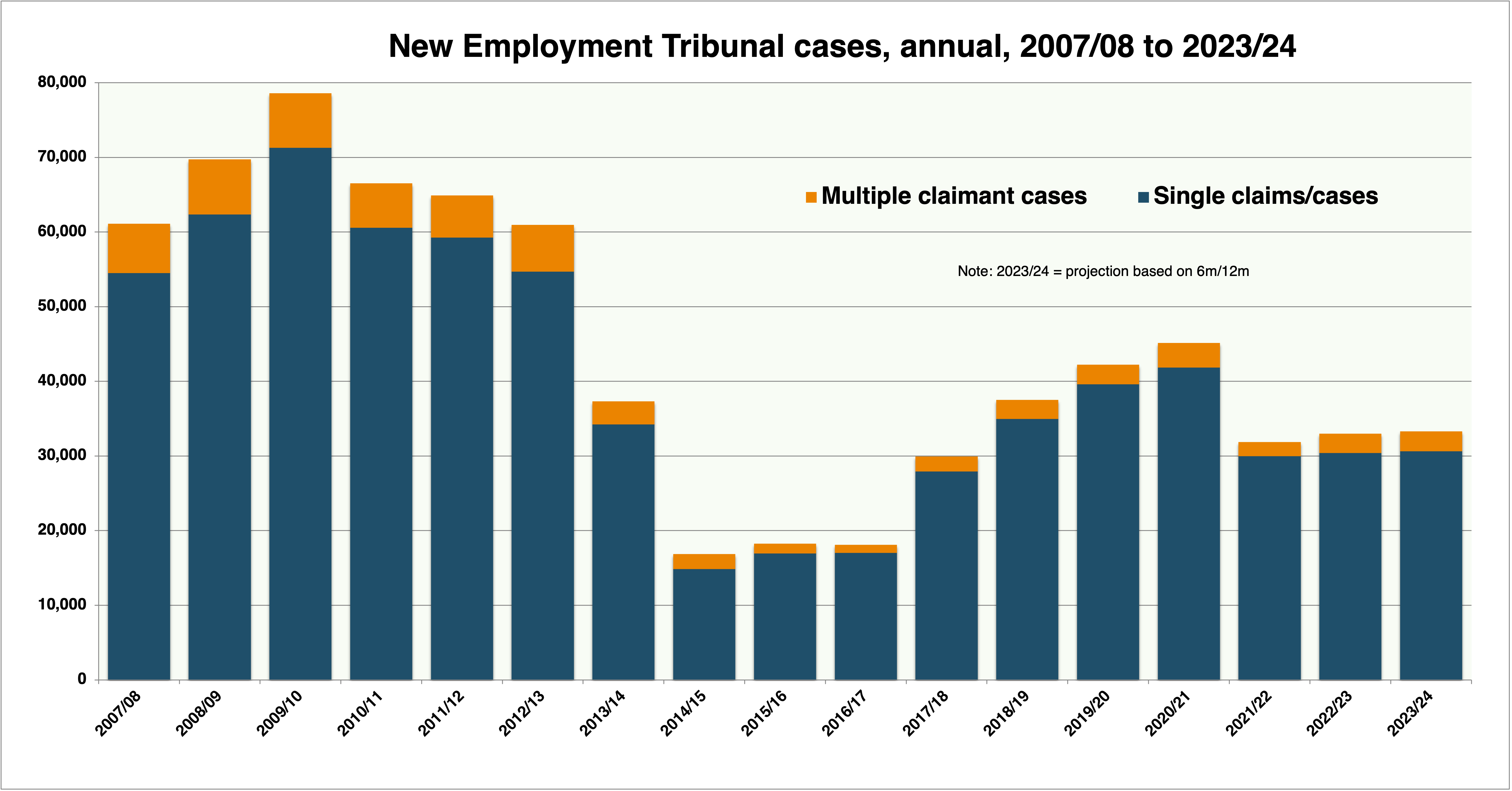
To put this new normal in historical perspective, from 2007/08 until 2012/13 the number of new ET cases exceeded 60,000 every year, and in 2009/10 there were 71,280 single claims and 7,339 multiple claimant cases. The number of multiple claimant cases has now settled down at about 40% of the level seen prior to the introduction of fees in 2013.
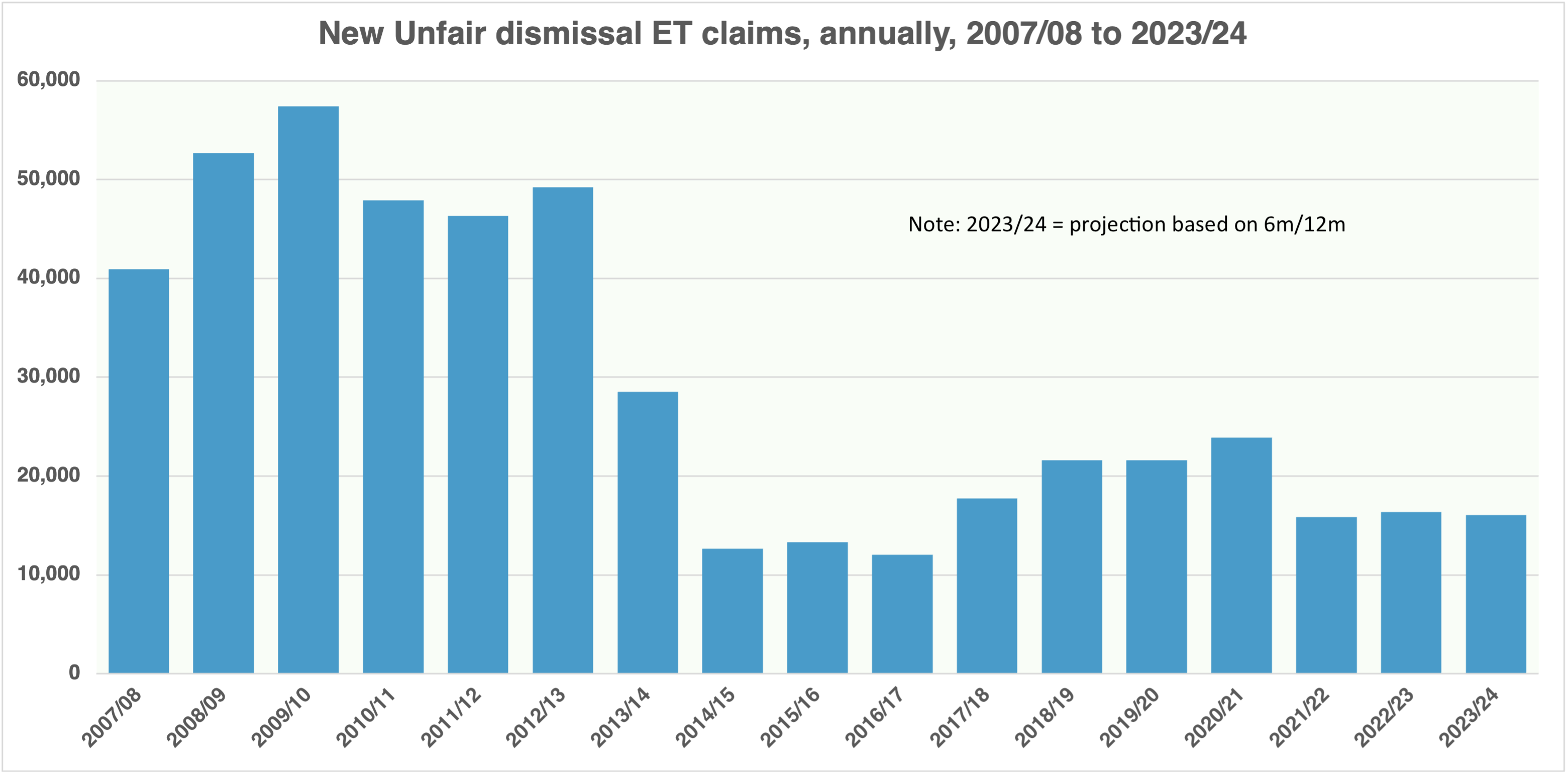
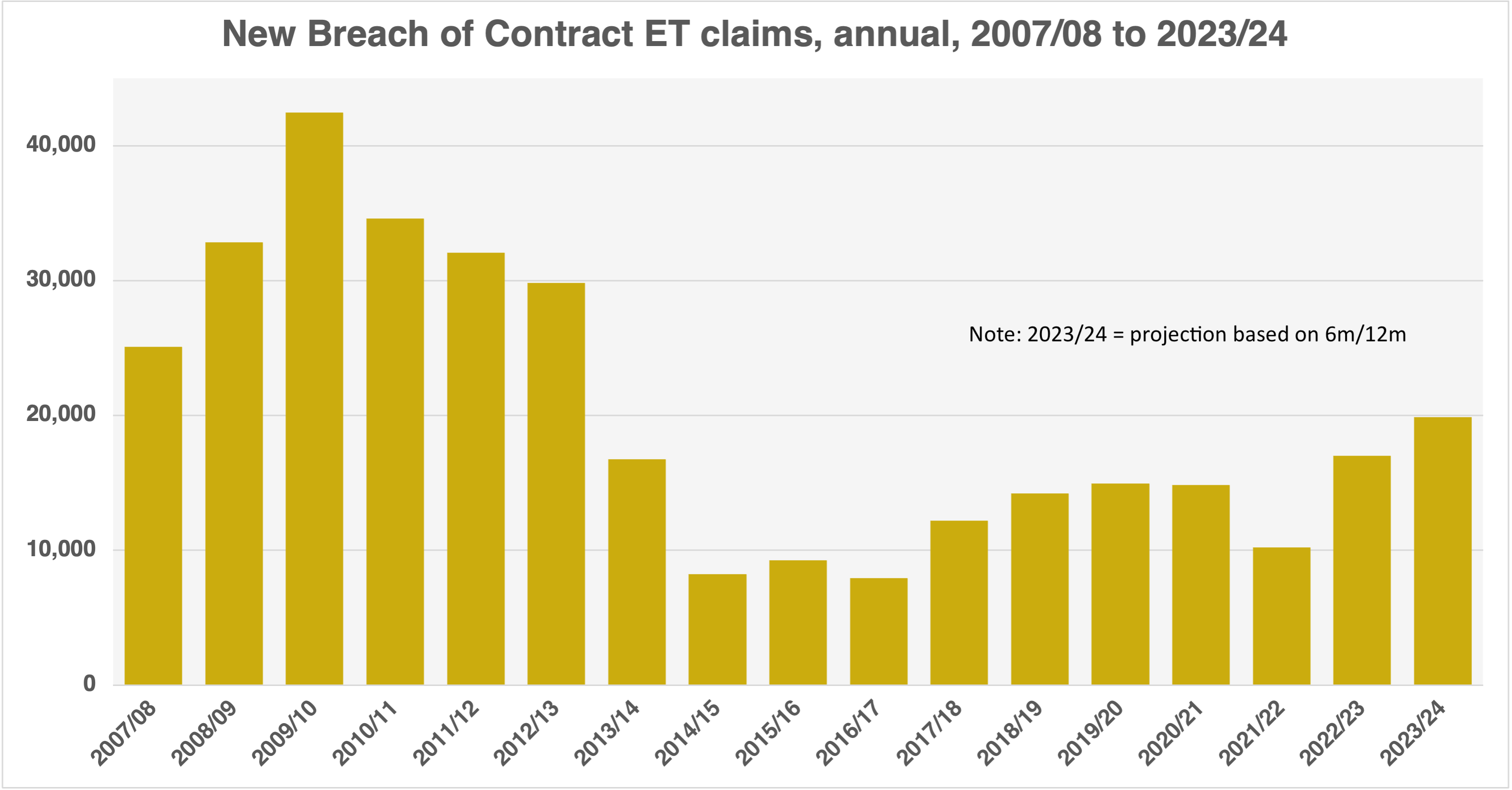
In some jurisdictions, such as Unfair Dismissal, Breach of Contract, Pregnancy/Maternity Discrimination, and Redundancy, the number of new (jurisdictional) claims broadly matches the overall pattern shown in the chart above. And in some of these jurisdictions the new normal is well below the level seen in 2012/13 (though this is probably due in part to the impact of the post-2008 economic recession on the number of claims in 2012/13, especially in the case of Redundancy claims).
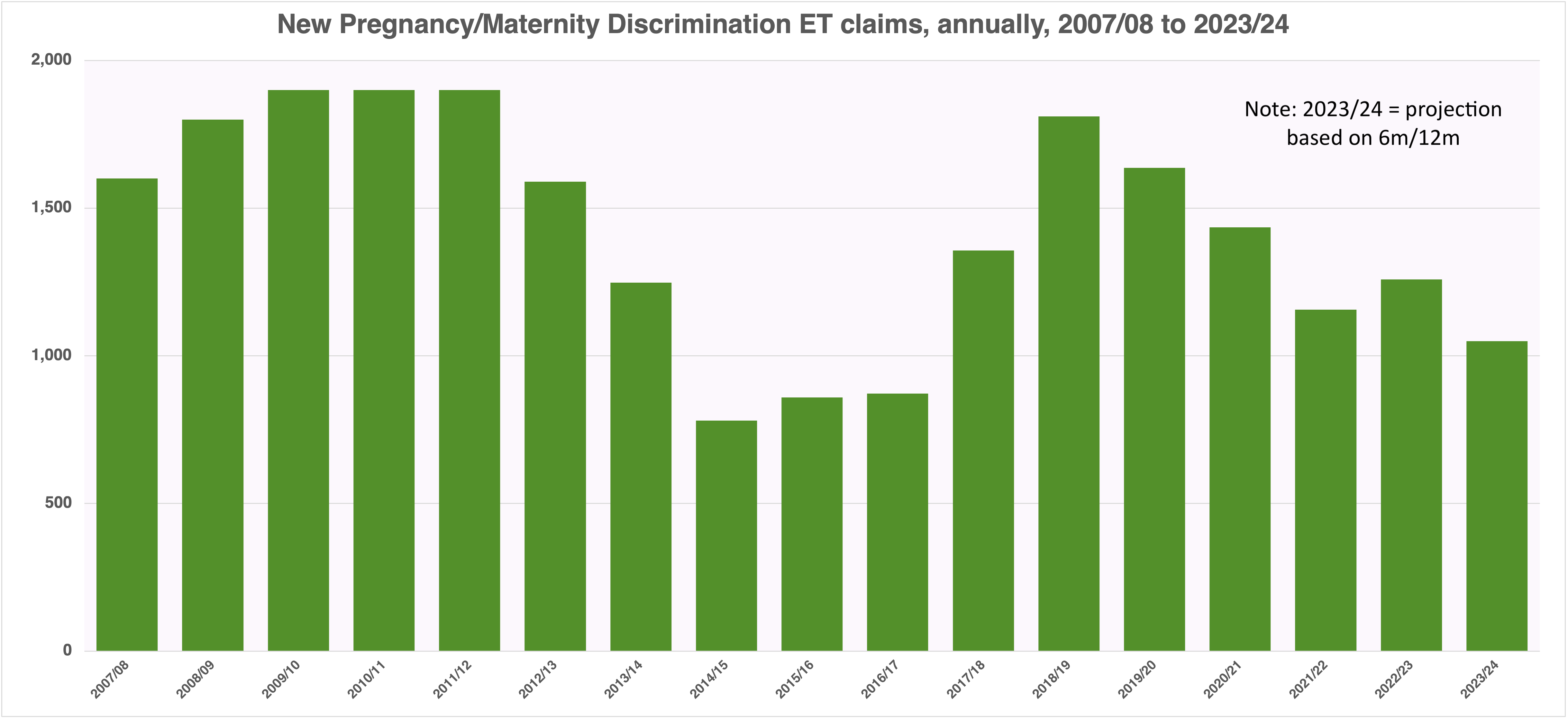
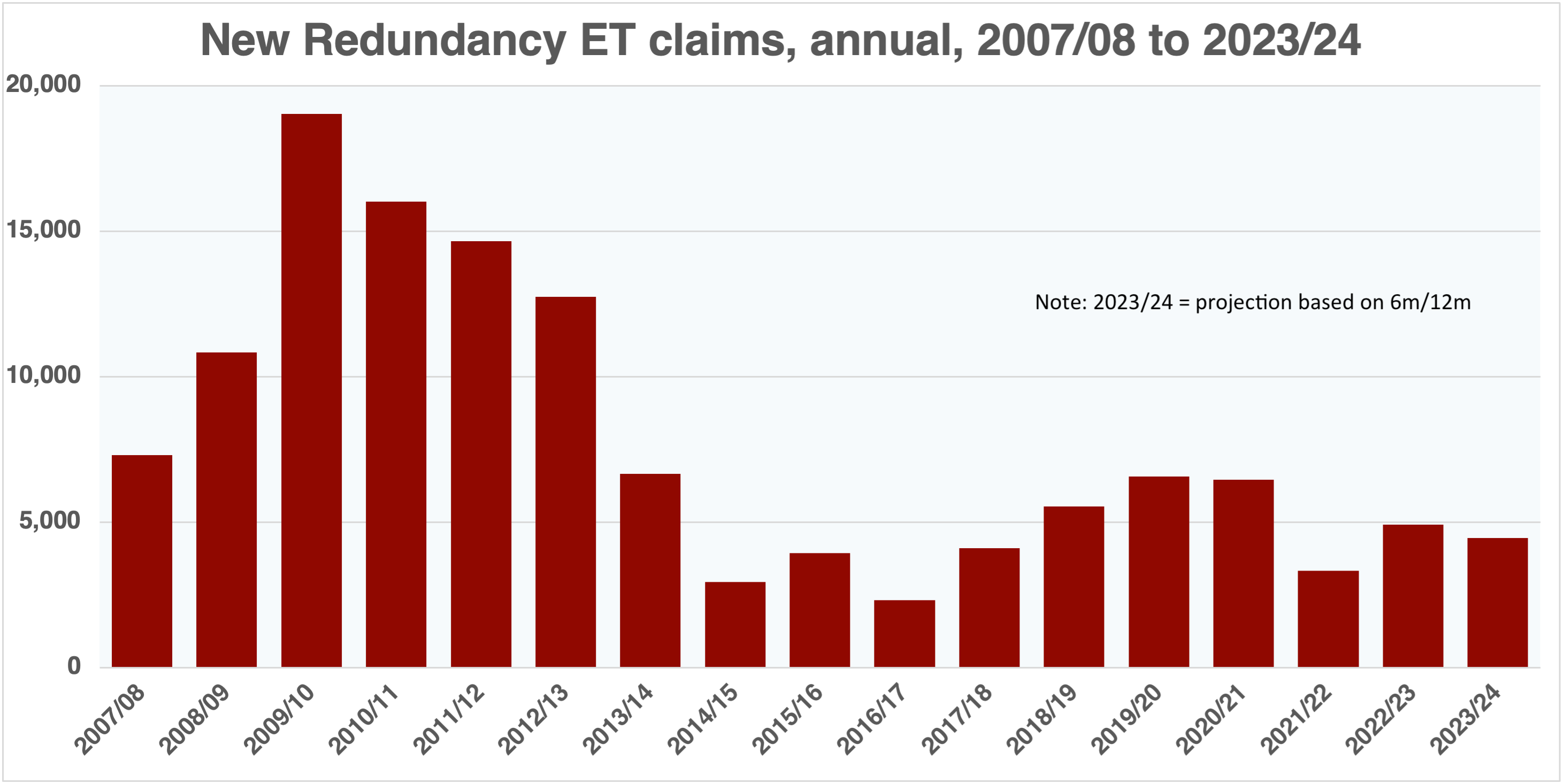
But in some of the smaller jurisdictions the number of new claims has bounced back to pretty much the level seen prior to the introduction of fees in 2013.

In contrast, however, a number of once magnificent employment law gravy trains now appear to be providing only a relatively limited service.


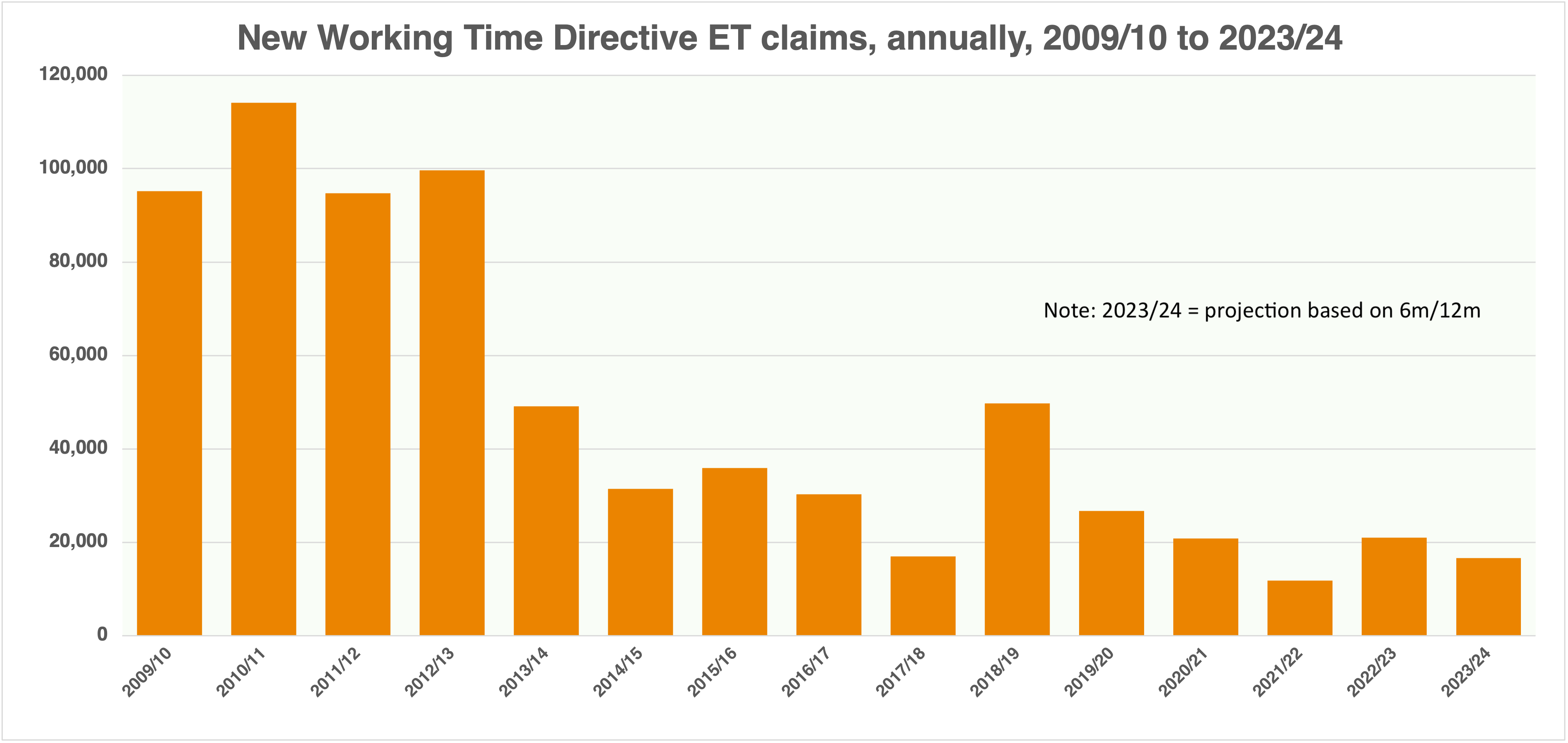
However, some enthusiasts are hoping to restore the Working Time Directive gravy train locomotive to working order in the near future, thanks to a grant from the Employment Rights (Amendment, Revocation & Transitional Provision) Regulations 2023.

 Labour Pains