So, having publicly defended the right of murderous armed nutjobs to be arrested ever so gently by police officers, former boob-enlarging hypnotist David Paulden (aka Zack Polanski) and his Watermelon Party have now gone big on the rights of workers.
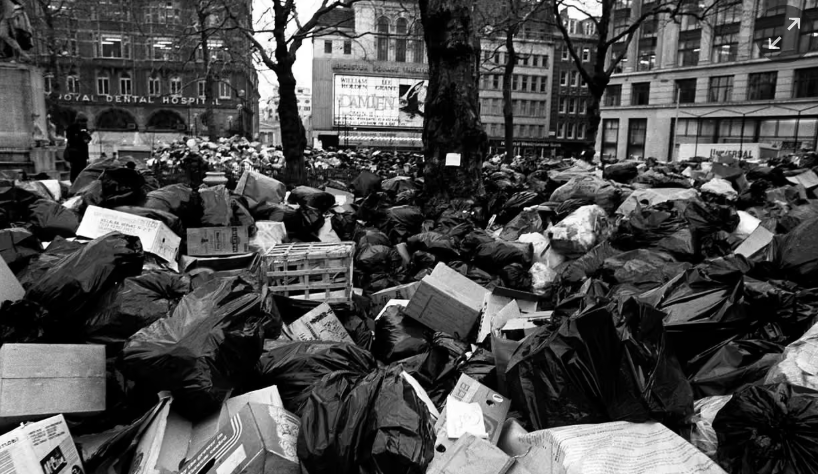
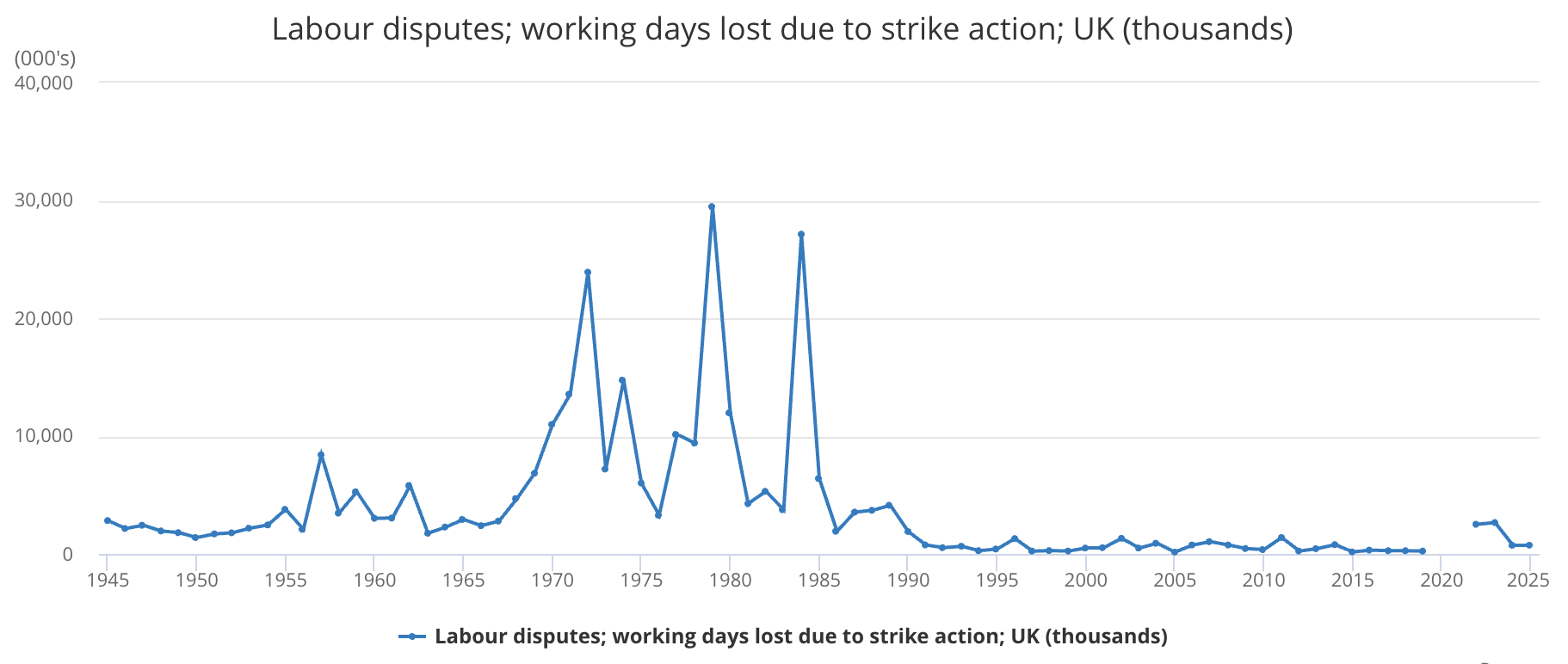
In what the Financial Times identifies as “an attempt to outflank Labour from the left [and] court trade unions”, the Workers’ Charter 2026 would take us back to the UK’s economic glory days of the 1970s and 1980s, by “scrapping all anti-union and anti-strike laws introduced since 1979” and introducing “strong legal rights to strike, picket and protest, including solidarity action and action for political and social causes”. Yep, it’s what voters are calling out for right now: the return of secondary picketing and beer and sandwiches in Number 10. You might want to stock up on candles and bin liners.
The Charter also promises a “full ban on zero-hours contracts”, but does not say how such a ban might actually work – as I’ve noted previously, banning such contracts is not as easy as it sounds, because not all of them are unwanted, let alone ‘exploitative’. In fact, hundreds of thousands of people work perfectly happily on a zero-hours contract. And the Charter promises both “more statutory holiday” and “more and fairer parental leave”, without saying how much more statutory holiday, or what kind of parental leave and how it would be ‘fairer’.
Indeed, as with many if not most Watermelon Party policies, the 420-word Charter has plenty of ambition, but is extremely short on specifics. The principal exception is a commitment to a “£15 per hour minimum wage for all workers regardless of age by April 2027”. But, while this would represent a a 38% increase for 18 to 20-year-olds, for whom the current rate is £10.85 per hour, the headline figure of £15 is not exactly radical: as long ago as August 2022, the TUC called for a £15 minimum wage “as soon as possible”.
Furthermore, there’s nothing in the Charter that explains why Paulden/Polanski and his Party think the minimum wage should be £15 per hour – rather than £14 or £16 per hour, say – in 2027. As the Resolution Foundation noted before the last general election, “[minimum wage rate] targets set as cash figures – preferably nice round ones – are always favoured by party campaigners. But they trouble policy experts who rightly point out that whether they are met or not is determined by what happens to inflation and nominal wages, rather than by improvements in the plight of the lowest earners relative to other workers.” Beyond April 2027, would a Watermelon Party government further increase what economists and policy makers call ‘the bite’ of the minimum wage, and if so by how much? The Charter simply doesn’t say.
It’s also unclear whether a £15 per hour minimum wage would increase the Watermelon Party’s promised universal basic income from some £1,600 per month, to £2,275 per month, at an additional cost to the Treasury of some £450 billion per year. All we know is that Paulden/Polanski believes his Party’s universal basic income should “broadly align with the minimum wage”. So, increase the minimum wage, increase the universal basic income (and its humongous cost). Maths, innit.
But hey, voters are embracing hope, apparently. So let workers and their families eat hope!