
(With apologies to Ray Stevens)
Well, come on, everybody, have you heard the news? Women & Equalities Minister Bridget Phillipson is in town, and – having already lost the Labour Party deputy leadership election – she’s now lost her moral compass.
Yep, rather than lay before Parliament the revised Code of Practice that the Equality & Human Rights Commission (EHRC) delivered to her two months ago, Bridget the Moral Midget, the Queen of the Transgender Blues, has instead demanded that the EHRC produce a Regulatory Impact Assessment – an analytical tool used by government departments to quantify the costs and benefits of proposed new legislation – on the revised Code.
As is clear from just a quick glance at the Government’s own template for departmental officials to use when completing a Regulatory Impact Assessment, this would be a major undertaking for a small, underfunded public body like the EHRC, and would undoubtedly take considerable time and effort. Over the weekend, Akua Reindorf, an EHRC Commissioner, said it “could take up to a year”.
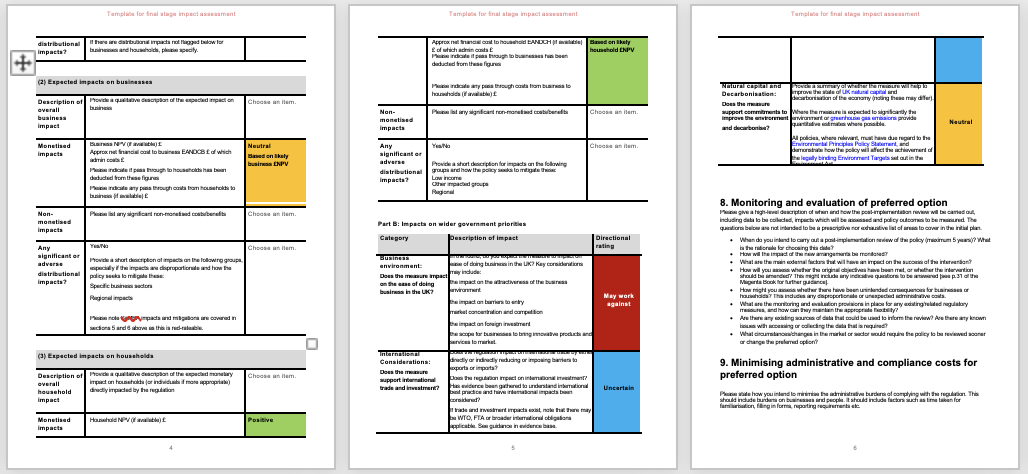
But even it only took one month, one week or even just one day, it would still be an utter waste of time and effort. Because what would be the point of the EHRC’s hard-pressed staff calculating the Net Present Social Value and Business Net Present Value of businesses and organisations ‘following the law’, when the only other policy option is for businesses and organisations to ‘ignore the law’, and ‘ignoring the law’ is not actually an option that is open to businesses and organisations?
Or, to look at the same point another way, even if the Regulatory Impact Assessment showed that following the guidance in the revised EHRC Code of Practice – in order to comply with the law – would collectively cost businesses and organisations £50 million, £500 million or even £5 billion a year, it would still be an utter waste of time and effort. Because, again, ‘not complying with the law’ is not an option that is open to businesses and organisations.
The law (as clarified by the Supreme Court on 16 April) is the law, and has been since 2010. So, if it would now cost a business or organisation a bit of money to ‘comply with the law’, that can only be because that business or organisation has been, and still is, flouting the law. Sure, it may now cost that business or organisation a few pounds to e.g. change the signs on the doors of its toilets and/or changing rooms (for employees and/or customers). But the business or organisation does have to follow the law.
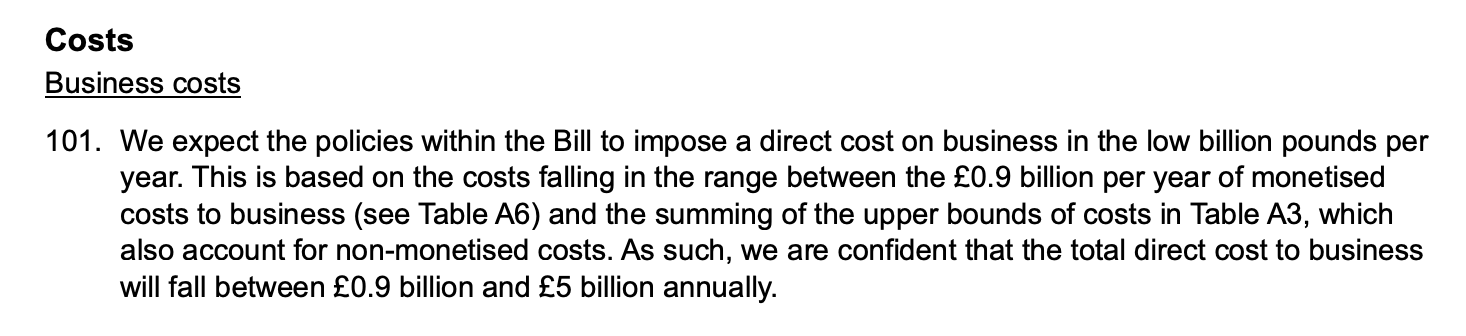
Following the law is what governments expect businesses and organisations to do. So, for example, we can be sure that, whenever Keir Starmer’s floundering Government gets around to implementing the (not universally popular) provisions of its flagship Employment Rights Bill, which the Government estimates will cost businesses alone as much as £5 billion per year, businesses and organisations will not be allowed to flout those provisions on the fatuous grounds it is ‘too costly’ to do otherwise.
Furthermore, you don’t have to conduct a Regulatory Impact Assessment to know that, if following the law might be costly to some businesses and organisations, in the long run it will be much more costly to them to continue to flout the law. Because, as businesses in particular are not usually slow to complain, dealing with discrimination claims in the courts and employment tribunals does not come cheap.
In short, only an utter moron would look at the Regulatory Impact Assessment template, with its complex charts and jargon-laden guidance notes – together with the so-called ‘business’ signatories of the numpty Trans+ Solidarity Alliance’s letter to Business Secretary Peter Kyle – and think “Yeah, I want the EHRC to waste weeks or months producing one of those before I tell businesses and organisations to just follow the law”.
So, is Bridget Phillipson an utter moron?
Well, she might be. But, having met her a few times when I worked in Parliament, I don’t think she’s an utter moron. Rather, Phillipson’s seemingly moronic decision to pointlessly demand a Regulatory Impact Assessment looks more like moral and intellectual cowardice on the part of someone who – faced with the above-mentioned numpty campaign by the Trans+ Solidarity Alliance, backed by equally numpty Labour backbench MPs – knows exactly what she is doing.
As barrister Naomi Cunningham noted in a blog over the weekend:
The Government knows that a Code of Practice doesn’t make or change the law, but only explains it. It knows that this is not what a Regulatory Impact Assessment is for. It knows that many employers and institutions are currently delaying complying with the law until the new Code is issued. It knows that many thousands of individuals are suffering ongoing legal wrongs because of the ongoing delay. It knows that a proportion of those will continue to bring claims, and the courts and [employment] tribunals will clog up with cases, and public authorities and private employers will continue to pour legal fees into defending them.
But it also knows that the new Code of Practice will be unpopular with many of its supporters. It is seizing on the idea of a Regulatory Impact Assessment to delay the inevitable; and to redirect the fury of its activists to the courts and tribunals, and to the brave individuals who will have to go to court at great personal cost, often one by one, sometimes in groups like the Darlington nurses, to enforce their rights.
It’s a craven exercise in blame-shifting.

And, as journalist and former Labour MP Tom Harris also concluded over the weekend:
If Phillipson had an ounce of the leadership qualities she spent weeks [trying but failing to persuade] Labour Party members she had, she would approve the EHRC [Code of Practice] now and face down women’s rights opponents in her party. A failure to do so will confirm her as a coward and unfit for the office she holds.
So, what should happen now? Well, as Naomi Cunningham notes in her blog, while “it would be helpful for businesses and [organisations] if the [EHRC] were permitted to publish a Code of Practice to help them understand their duties under the law, it’s not essential. The law is as stated by the Supreme Court, and the judgment is written in clear language”. To my mind, the EHRC should now simply forget about the revised Code, leave the ball in Bridget the Moral Midget’s court, and concentrate its meagre resources on taking legal action against non-compliant businesses and organisations.
Plenty of businesses and organisations – including, as noted on this blog, Virgin Active – have already changed their policy/practice to comply with the Supreme Court ruling. But a few high-profile court cases brought by the EHRC would encourager les autres. Meanwhile, it would be left to Bridget the Moral Midget to revoke the (outdated and obsolete) 2011 Code of Practice, to which some idiotic and/or captured businesses and organisations still cling. As Naomi Cunningham notes, only the Government can do that, and it would be “irresponsible and irrational” for it to delay doing so any longer.
However, if Baroness (Kishwer) Falkner and her fellow EHRC commissioners are feeling chipper, they could also send Bridget the Moral Midget a one-paragraph Regulatory Impact Assessment stating:
For most businesses and organisations, following the law will be cheaper than not following the law. Possibly much cheaper. But in any event, all businesses and organisations have to follow the law, and it is not the role of the EHRC or the Government to encourage or permit businesses and organisations to do otherwise.
I’d dig it, I’d really dig it.
Update, 7 November: On Wednesday, it emerged that what Bridget the Moral Midget has asked the EHRC to produce is not a full Regulatory Impact Assessment, but a “minimum assessment”. In answer to an oral question by shadow women & equalities minister Claire Coutinho, the Moral Midget asserted to the House of Commons that:
Any suggestion of delay is simply wrong. The EHRC should know that I am legally required to consult the devolved Governments. The EHRC has not been asked to carry out a full regulatory impact assessment, but instead a minimum assessment.
But what the fuck is a “minimum assessment”? Under the 2023 Better Regulation Framework, there are only four types of assessment. And ‘minimum assessment’ is not one of them. So, what is it that Bridget the Moral Midget has demanded from the EHRC? Shadow minister Claire Coutinho is on the case, and we await an answer.
Furthermore, as Lucy Hunter Blackburn of policy analysis collective Murray Blackburn Mackenzie has noted on social media, it is far from clear that Bridget the Moral Midget is under any legal obligation to consult the devolved governments in relation to the revised EHRC Code of Practice.
So, what is Bridget the Moral Midget playing at? I assume she’s waiting for ‘something’ that gets her off the hook. A cabinet reshuffle that enables her to pass the parcel to some other sucker. Keir Starmer ‘accidentally’ falling under a bus. A significant court ruling that gives her enough cover to face down numpty Labour backbenchers. The outbreak of WWIII. Something. Anything.

 Labour Pains
Pingback: Not actually an option - Butterflies and Wheels
Pingback: Jolyon v the EHRC, biological reality, and the rule of law | Labour Pains